
Support for unpaid carers
Share your experiences for a Parliamentary debate
Deadline: midday, Wednesday 14 October
"Unpaid carers make an enormous contribution to our communities and to the people they care for. Yet too often, carers face significant challenges, including financial pressures, difficulties balancing caring responsibilities with work or education, and a lack of practical support. Many feel invisible, with their dedication and sacrifice going unrecognised because caring so often takes place behind closed doors. Despite this, unpaid carers are a vital pillar of our social care system, supporting loved ones every day and helping to prevent people from falling through the cracks.
"My debate in Westminster Hall will shine a light on the experiences of unpaid carers, the invaluable role they play, and the greater support and recognition they need and deserve. Whether you are an unpaid carer yourself or know someone who is, I want to hear about your experiences.
"Please complete the survey below to help inform the debate."
Deadline: midday, Wednesday 14 October
How to watch the debate:
Links to watch the debate and read the transcript will be added to this page as soon as they are available from 15 October.
How your contributions are shared
In these exercises, members of the public who have signed relevant petitions or are subscribed to parliamentary newsletters are invited to share their experiences and ideas.
These are passed on to the MP leading the debate, who may refer to them directly in their speeches.
Find or create petitions on the Petitions website.
Sign up to the Your UK Parliament newsletter for more opportunities to share your experiences for debates like these.
What happens next?
If you shared your email in the survey, we’ll send you an update after the debate with links to watch it and read the transcript. This will also include information about the Government's response.
How do debates in Westminster Hall work?
Support and information
Support for carers
- Carer's Allowance (England and Wales)
- Carer's Allowance (Northern Ireland)
- Carer Support Payments (Scotland)
- NHS: Carer's assessments
- Carers UK: Help and advice
- Carers Trust: Help for carers
Relevant research
House of Commons Library
- Young carers in education (April 2026)
- Inequalities faced by unpaid carers (November 2025)
- Local authority support for unpaid carers in England (June 2025)
What are Westminster Hall debates?
Debates in Westminster Hall enable backbench MPs from any party to raise an issue, and receive a response from the government.
They do not involve a vote on a particular action or decision.
Instead, the aim is to:
- raise awareness of an issue, often as part of a wider campaign
- seek to influence government policy
- put the views of backbench MPs, opposition parties, and the government on record.
The setting
Westminster Hall debates happen in the Grand Committee Room — the second chamber of the House of Commons.
Here, MPs sit in a horseshoe shape. This can help to encourage a constructive atmosphere.
Chairing the debate
Westminster Hall debates are chaired by an MP. The role of the Chair is to:
- ensure debates keep to the time allocated
- call on MPs to speak
- make sure MPs follow the rules of debate.
To mark the start of the debate the Chair says:
"Order, order"
Opening the debate
The MP leading the debate makes the first speech.
They will generally:
- outline their views on the issue
- present examples
- in some cases, call on the government to take action.
Backbench speeches
After the opening speech, other backbench MPs take turns to speak in the debate.
The main opposition parties
For longer debates, the main opposition parties then have a chance to respond.
An MP from the third largest party generally goes first, and is followed by an MP from the official Opposition.
They outline their party’s position on the issue.
The government's response
The Chair then calls the Minister to respond to the debate on behalf of the government.
The Minister will generally:
- respond to concerns raised by MPs
- explain the government's position and policies
- share relevant plans or ambitions for the future.
Closing the debate
If there is enough time, the MP who opened the debate can make final comments.
The debate is then concluded.
Engaging with debates
- You can contact your MP and ask them to attend a debate. Or you can ask them to lead their own debate on an issue you feel is important.
- For some debates, you may be asked to share your insights and experiences. This can help inform the MPs taking part in the debate. See the Chamber Engagement website for details.
- You can watch debates online, read the transcripts, or attend in person. Find out what's on by looking at the Parliamentary calendar.
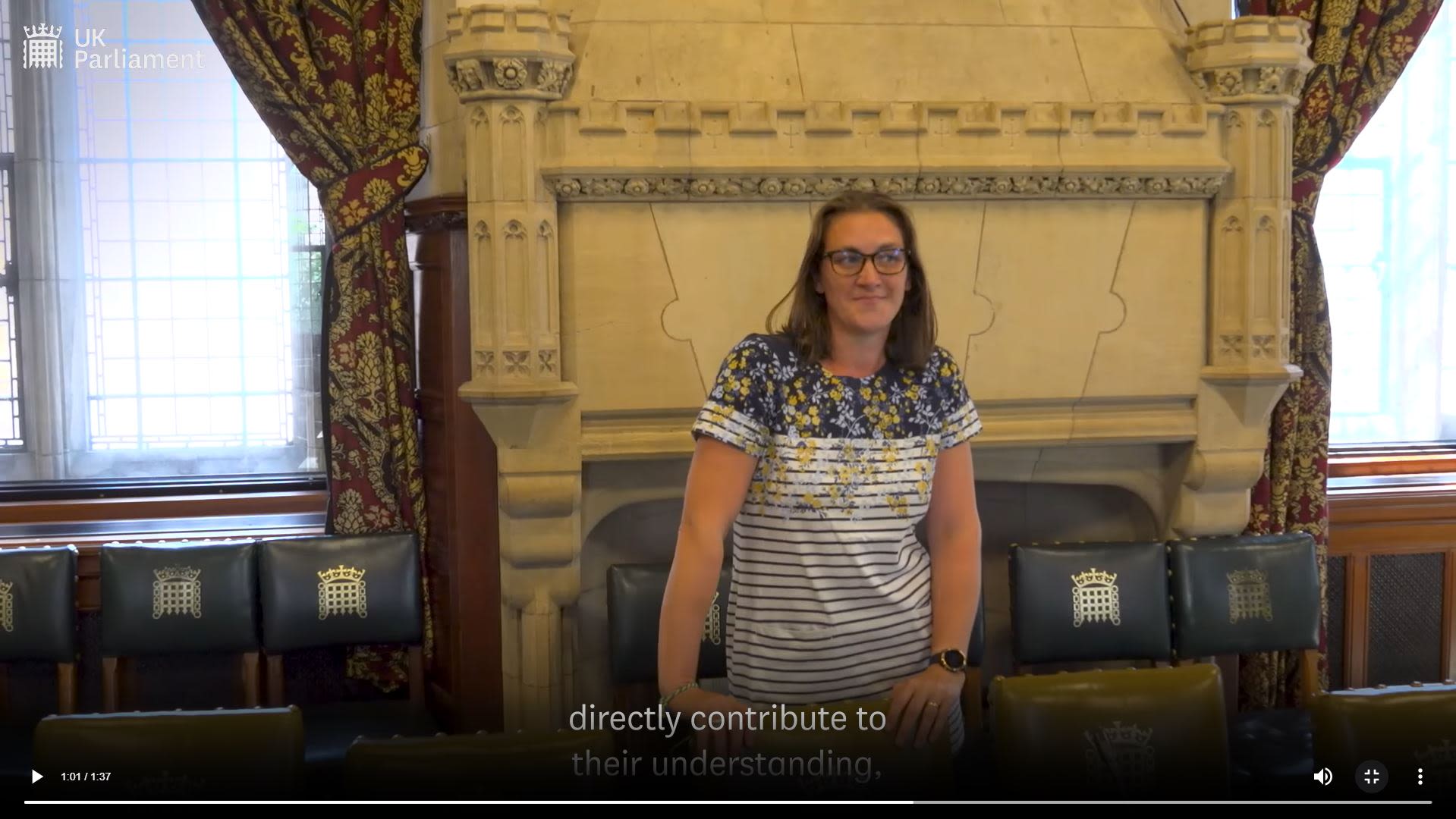
Lisa, Ian and Charlotte helped inform previous debates on topics like the menopause and pensions advice:
For more on Westminster Hall debates, see How Parliament Works.
Photo credit: UK Parliament / Jessica Taylor
 Built with Shorthand